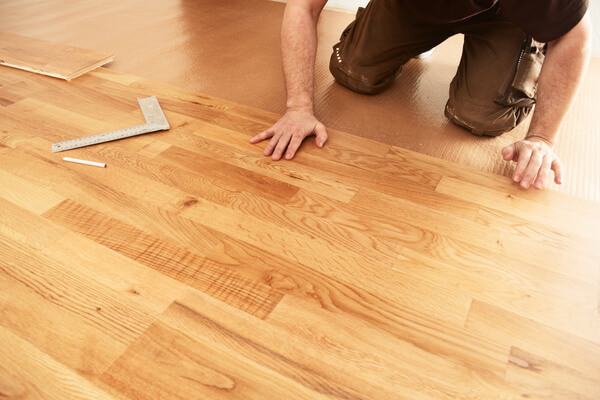
There are three main hardwood installation methods: nail-down, glue-down, and floating. Nail-down suits solid hardwood on wood subfloors, glue-down works best for engineered hardwood over concrete, and floating installs engineered hardwood without attaching it to the subfloor – making it ideal for basements.
Choosing the right installation method matters just as much as choosing the right wood species. Each method suits different subfloors, flooring types, and rooms in your Nashville home. Below, we break down how each one works so you know what to expect before your project begins.
The Three Installation Methods at a Glance
- Nail-down: planks nailed to a wood subfloor, most common for solid hardwood
- Glue-down: planks bonded with adhesive, ideal for engineered hardwood over concrete
- Floating: planks lock together without subfloor attachment, works on any level
- Method choice depends on subfloor type, flooring type, and room location
- All new hardwood needs 3-7 days of acclimation before installation begins
Nail-Down Installation
With nail down hardwood flooring, planks are secured directly to a wooden subfloor using a flooring nailer or stapler. This is the most common method for solid hardwood and creates a strong, stable connection between the planks and the subfloor.
Our hardwood floor installation team uses this method for most solid hardwood projects across Nashville, Brentwood, and Franklin.
- Best suited for solid hardwood on wood subfloors
- Creates a strong, long-lasting bond with the subfloor
- Not recommended for concrete subfloors or basements
- Common in living rooms, bedrooms, and dining rooms
Glue-Down Installation
With glue down hardwood flooring, a strong adhesive secures each plank directly to the subfloor. This method is ideal for engineered hardwood installed over concrete, giving the floor excellent stability and minimal movement.
This is one of the reasons the choice between engineered vs solid hardwood matters early on, since glue-down works best with engineered products rather than solid wood.
- Ideal for engineered hardwood over concrete subfloors
- Provides maximum stability with minimal plank movement
- Requires a clean, level, and fully cured subfloor
- A common choice for ground-floor rooms and additions
Floating Installation
A floating hardwood floor is not attached to the subfloor at all. Instead, the planks lock together and “float” as one connected surface, allowing slight movement with temperature and humidity changes. This method is used mostly with engineered hardwood.
Because it isn’t fastened to the subfloor, floating installation can go on any level of your home, including basements. Our what to expect during installation guide walks through each stage of this process in detail.
- Used mostly with engineered hardwood
- Can be installed on any level of the home, including basements
- Faster installation with less mess than nail-down or glue-down
- Allows natural expansion and contraction with humidity changes
Sanding and Finishing After Installation
If you choose unfinished hardwood with a nail-down or glue-down method, the floor still needs to be sanded and finished on-site after installation. This includes rough sanding, fine sanding, staining if desired, and multiple coats of protective finish.
Our sand and finish service handles this final step, using a dust containment system to keep the process clean. This stage typically adds 2-3 days to your project timeline.
- Only needed for unfinished hardwood, not prefinished planks
- Includes rough sanding, fine sanding, staining, and coating
- Adds roughly 2-3 days to the overall project timeline
- Dust containment keeps the process clean throughout
Which Method Is Right for Your Nashville Home?
The right method depends on your subfloor, the type of hardwood you choose, and where in your home you’re installing. Solid hardwood generally pairs with nail-down installation, while engineered hardwood installation opens up glue-down or floating options, especially over concrete or in basements.
- Choose nail-down for solid hardwood on a wood subfloor
- Choose glue-down for engineered hardwood over concrete
- Choose floating for basements or faster, low-mess installation
- A free in-home assessment confirms the best method for your space
Frequently Asked Questions
1. What is the most common hardwood installation method?
Nail-down installation is the most common method for solid hardwood, where planks are nailed directly to a wood subfloor.
2. Can hardwood be installed over concrete?
Yes, engineered hardwood can be installed over concrete using the glue-down method, which bonds planks directly to the subfloor.
3. Which installation method works in a basement?
Floating installation is typically used in basements since engineered hardwood can be installed on any level and isn’t attached directly to the subfloor.
4. How long does hardwood need to acclimate before installation?
Hardwood typically needs 3-7 days to acclimate to your home’s temperature and humidity before installation begins.
5. Do all installation methods need sanding and finishing?
Only unfinished hardwood needs on-site sanding and finishing after installation; prefinished planks skip this step entirely.
Nail-down, glue-down, and floating installation each serve a different purpose depending on your subfloor, flooring type, and the room you’re updating. Not sure which method fits your Nashville home? Contact C&S Flooring today for a free in-home assessment, and let our team recommend the right installation method for your space.