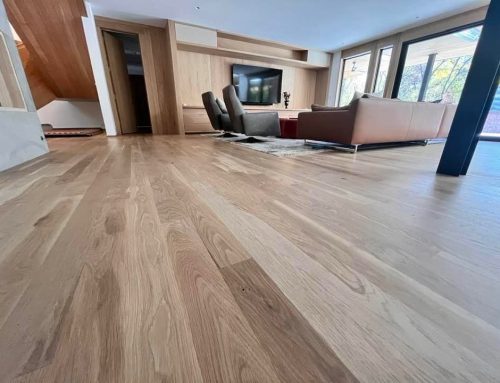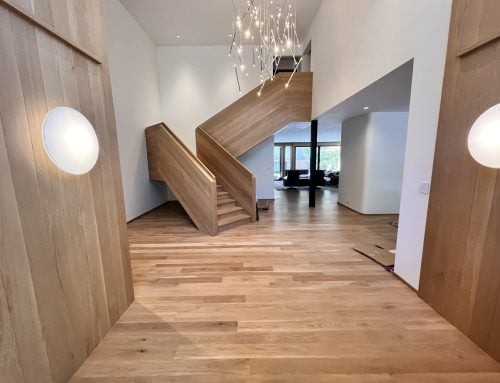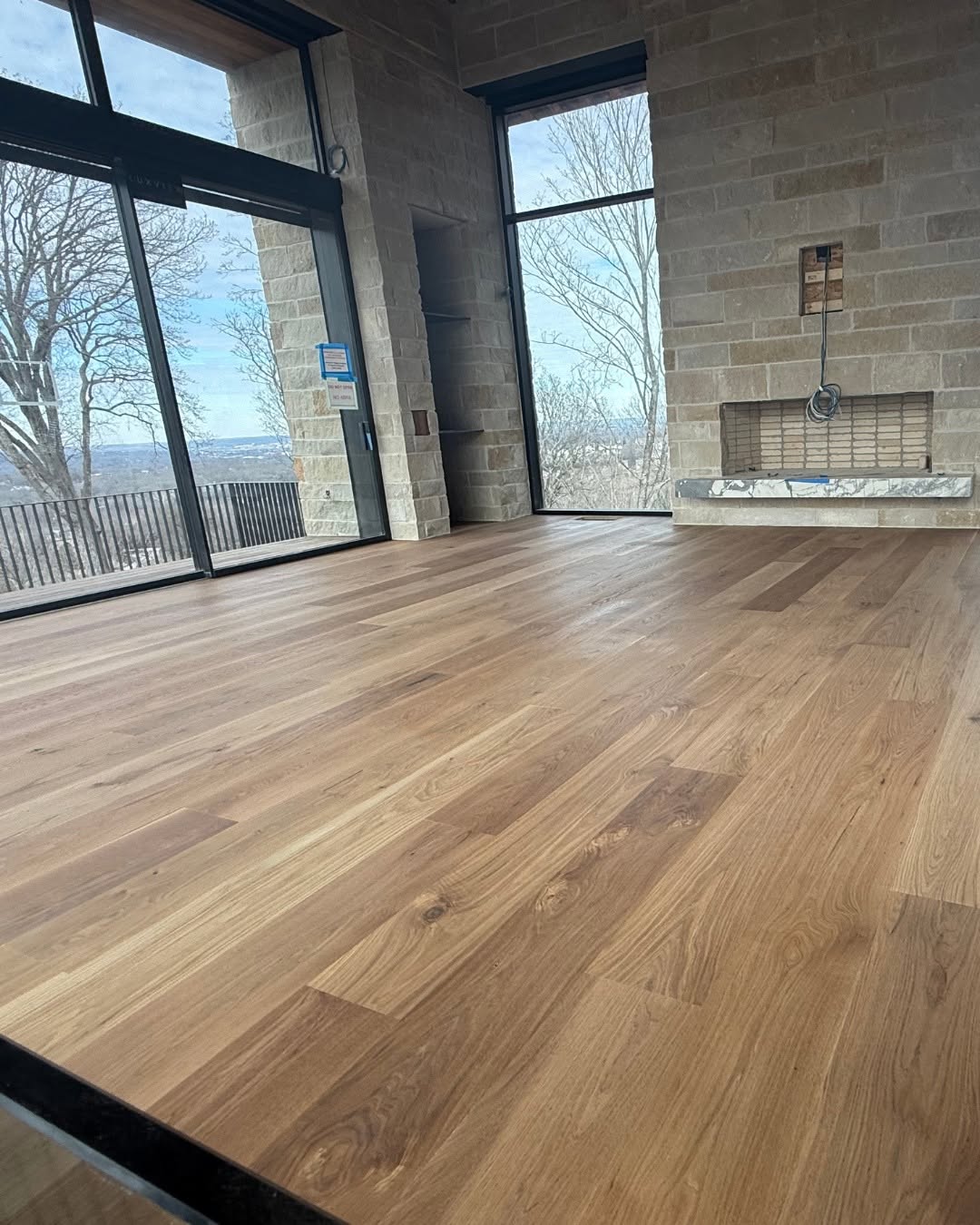
Installing hardwood flooring for new construction differs from a renovation project mainly in subfloor condition, timeline flexibility, and how installation fits into the broader project schedule. New builds typically offer a clean, accessible subfloor, although moisture levels, flatness, and overall subfloor condition should still be checked before hardwood installation.
Hardwood Installation in New Construction
Building a new home gives you a clean slate. The subfloor is freshly installed and hasn’t been exposed to years of wear, moisture, or prior flooring materials, which generally makes the preparation stage more straightforward. New construction also allows hardwood installation to be scheduled alongside other trades, so it’s worth coordinating timing with your builder to avoid conflicts with painting, trim work, or other finishing stages happening in the same space.
Hardwood Installation in a Renovation
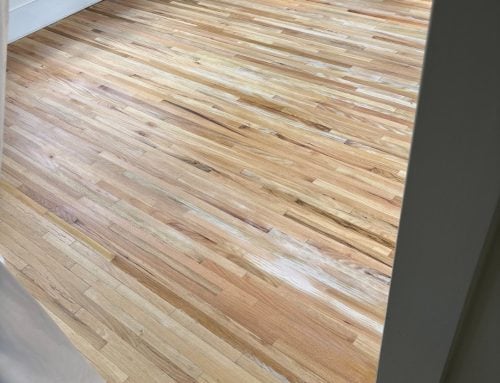
Renovation projects come with their own set of considerations. Existing flooring, whether it’s old hardwood, carpet, or tile, typically needs to be removed before installation can begin. The subfloor underneath may also require more extensive subfloor preparation, since years of wear, moisture exposure, or settling can affect its condition. Renovations also often mean working around furniture, existing cabinetry, or a home that’s still occupied during the project, which can affect timeline and scheduling.
Choosing the Right Installation Method for Your Project
Whether you’re building new or renovating, the right installation method still depends largely on your subfloor. Nail-down installation works well with a solid wood subfloor, common in many new builds and older homes alike. Glue-down installation is often the better fit for concrete subfloors, which can come up in both new construction with slab foundations and renovations involving basements or lower levels. Floating installation offers flexibility in either scenario, particularly when working around an existing subfloor that can’t be altered.
Budgeting for Either Project Type
Cost considerations can differ between the two. Renovations may require budgeting for floor prep or demo of existing flooring, while new construction typically starts from a fresh subfloor. For a broader look at pricing, this homeowner guide to hardwood flooring in Nashville covers what affects cost. In either case, getting a clear picture of your project’s full scope upfront helps avoid surprises once work begins.
Why Planning Ahead Matters
Whether you’re building a new home or replacing old floors, starting with a clear plan makes the entire process smoother. Coordinating timing with other trades in new construction, or accounting for removal and subfloor prep in a renovation, both come down to the same goal: setting the project up so installation goes as smoothly as possible from day one.
With over 25 years working on both new construction and renovation projects across Greater Nashville, Brentwood, and Franklin, we help homeowners and builders plan hardwood installation around their specific project, not a one-size-fits-all timeline.
Frequently Asked Questions
1. Is hardwood installation different for new construction versus a renovation?
Yes. New construction typically offers a clean, freshly installed subfloor, while renovations often require removing old flooring and may need more extensive subfloor preparation before installation can begin.
2. Does the installation method change between new construction and renovation projects?
The method still depends primarily on subfloor type rather than whether it’s new construction or a renovation. Nail-down, glue-down, and floating methods are all used in both scenarios depending on the subfloor.
3. Should I coordinate hardwood installation with other trades in a new build?
Yes. Scheduling hardwood installation alongside other finishing trades, like painting or trim work, helps avoid conflicts and keeps the overall project timeline on track.
Planning a new build or a renovation? Contact C&S Flooring for a free quote to discuss your project.