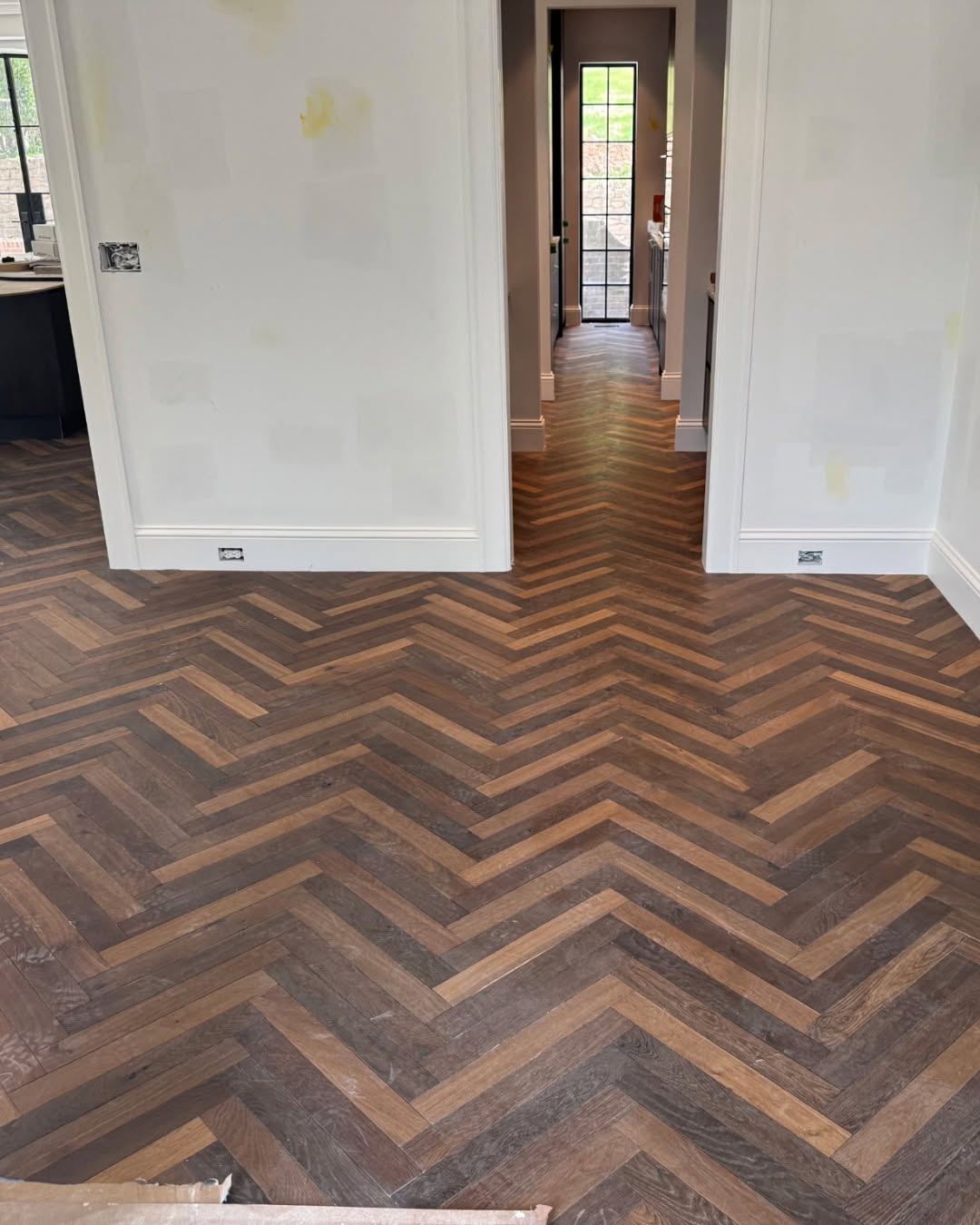
Choosing hardwood flooring for a house is a different project than choosing it for a business. Foot traffic, budget, timelines, and building codes all shape what “the right floor” actually looks like. In this guide, we walk through the five biggest differences between residential vs commercial hardwood flooring so you can plan your project with confidence.
Residential and commercial hardwood flooring differ mainly in wood hardness, installation methods, maintenance needs, cost, and code requirements. Commercial spaces need tougher wood species and professional installation to handle heavy foot traffic, while residential floors can focus more on comfort, style, and long-term home value.
1. Wood Hardness and Durability
Every wood species has a Janka hardness rating, which measures how well it resists dents and wear. This number matters more in commercial buildings than in most homes.
In a residential setting, a family room sees far less daily traffic than a retail store or office lobby. Homeowners can often choose softer, more decorative species like walnut or cherry without worrying about heavy wear.
Commercial spaces, on the other hand, deal with constant foot traffic, rolling carts, and furniture movement. That’s why we typically recommend harder species such as oak or hickory, along with a more durable finish that holds up better against scratching and scuffing over time.
This doesn’t mean homeowners should ignore hardness entirely. Busy households with kids, pets, or high-traffic hallways may still benefit from a harder species or a more durable finish, even in a residential setting. For many homes, solid hardwood flooring remains the preferred choice, since it can be sanded and refinished multiple times over its lifespan.
2. Installation Methods Differ by Space
The installation process for commercial hardwood flooring installation is rarely the same as a typical home project. Commercial buildings often sit on concrete slabs, which don’t allow for traditional nail-down methods. In these cases, engineered hardwood is usually the better choice, since it can be glued or floated directly over concrete.
Homes, especially those with wood subfloors, have more flexibility. We can often use traditional nail-down installation methods that give solid hardwood its classic feel underfoot.
Larger commercial square footage also calls for tighter project scheduling, since commercial timelines often need to work around regular business hours to minimize disruption to customers or staff.
3. How Much Maintenance Does Each Type Need?
Maintenance schedules for residential and commercial hardwood flooring look quite different. A home floor might need refinishing every several years, along with regular sweeping and occasional deep cleaning.
Commercial floors, especially in high-traffic areas like restaurants or retail stores, often need more frequent cleaning and periodic recoating to protect the finish. Skipping this upkeep can shorten the floor’s lifespan significantly, since dirt and grit act like sandpaper on the wood’s surface. In many cases, a professional sand and finish service can restore a worn commercial or residential floor without the cost of full replacement.
4. Cost Considerations for Residential vs Commercial Projects
Cost is one of the most common questions we hear, and it depends on several factors: square footage, wood species, finish type, and site conditions. Commercial projects often involve larger areas, which can affect total project cost, while also potentially benefiting from lower per-square-foot pricing at scale.
Residential projects are usually smaller in scope but may include more detailed finish work, custom borders, or transitions between rooms. Timeline can also affect cost, since commercial projects sometimes require scheduling around business hours to avoid disrupting operations. Because every project is different, we recommend requesting a personalized quote rather than relying on general estimates. If you’re still weighing which material fits your budget, our guide to flooring options for Nashville homes breaks down costs across hardwood, LVP, and more.
5. Building Codes and ADA Compliance for Commercial Flooring
Commercial hardwood flooring must often meet stricter building codes than residential flooring. This can include fire-rating requirements, slip-resistance standards, and ADA compliance for accessible transitions between flooring surfaces.
Residential homes generally don’t face these same regulatory requirements, giving homeowners more freedom in material and finish choices. For commercial property owners, working with an experienced flooring team from the start can help avoid costly delays or rework.
Partnering with a team experienced in both settings helps commercial property owners plan around these requirements without slowing down their project timeline.
Why Choose C&S Flooring for Your Project?
Whether you’re updating a single room or flooring an entire commercial property, our team brings both residential and commercial expertise to every job. We help clients choose the right wood species and finish based on their space, budget, and long-term goals, always with honest, practical guidance rather than a one-size-fits-all recommendation.
Frequently Asked Questions
1. Is commercial hardwood flooring more durable than residential hardwood flooring?
Yes, in most cases. Commercial spaces typically use harder wood species and more durable finishes to withstand heavy foot traffic, while residential flooring can prioritize comfort and appearance since daily wear is usually much lighter.
2. Can I install solid hardwood flooring in a commercial building?
It depends on the subfloor. Solid hardwood works well over wood subfloors, but many commercial buildings are built on concrete slabs, where engineered hardwood is usually a better fit since it can be installed without nailing.
3. How often should commercial hardwood floors be refinished?
This varies based on foot traffic and maintenance habits. High-traffic commercial spaces generally need more frequent recoating than residential floors to keep the finish protected and looking its best.
4. Does commercial hardwood flooring cost more than residential flooring?
Total cost depends on square footage, wood species, and site conditions rather than the setting alone. We recommend a personalized quote, since commercial and residential projects can vary widely in scope.
5. Do commercial hardwood floors need to meet special building codes?
Yes. Commercial flooring often must meet fire-rating, slip-resistance, and ADA compliance standards that residential flooring typically doesn’t require, especially in public-facing spaces.
6. Is engineered hardwood a good option for both homes and businesses?
Yes. Engineered hardwood works well in both settings, especially over concrete subfloors, and offers strong stability against moisture and temperature changes compared to solid hardwood.
Residential and commercial hardwood flooring share the same natural material, but the differences in durability, installation, maintenance, cost, and code requirements are significant. Understanding these differences helps you choose a floor that performs well for years to come.
If you’re ready to explore your options, schedule a free consultation with our team, and we’ll help you find the right hardwood solution for your space.