One of the most common questions we hear from homeowners is: “How many times can I actually refinish my hardwood floors?” At C&S Flooring, we have been restoring and placing wood floors across Greater Nashville, Brentwood, and Franklin for over 25 years – and the answer might surprise you. Most floors can be refinished multiple times, giving them decades of renewed beauty without full replacement. In this guide, we break down exactly what determines how many refinishes your floors can handle and what signs to watch for.
How Many Times Can Your Floors Be Refinished?
The number of times a floor can be refinished depends primarily on the thickness of its wear layer – the solid wood above the tongue and groove.
Solid hardwood floors typically have a wear layer of ¾ inch, allowing them to be refinished 3 to 5 times over their lifetime. Each sanding removes a thin layer of wood, so the total number of refinishes is directly tied to how much material remains above the subfloor.
Engineered floors have a thinner veneer layer, usually between 1mm and 4mm, meaning they can typically be refinished 1 to 2 times, depending on the product. Thinner veneers may only allow for a light buff and recoat rather than a full sand.
One factor unique to Middle Tennessee is humidity. Our region’s seasonal moisture fluctuations cause wood to expand and contract over time, which can accelerate surface wear and affect how the floor responds to sanding. This is why working with an experienced local team matters – we understand how the climate here interacts with different wood species and finishes.
Signs Your Floors Need Refinishing
Knowing when to refinish is just as important as knowing how many times you can. Here are the key signs we see most often across properties in our area:
- Deep scratches and surface dullness – When everyday cleaning no longer restores the shine, the finish layer has worn through
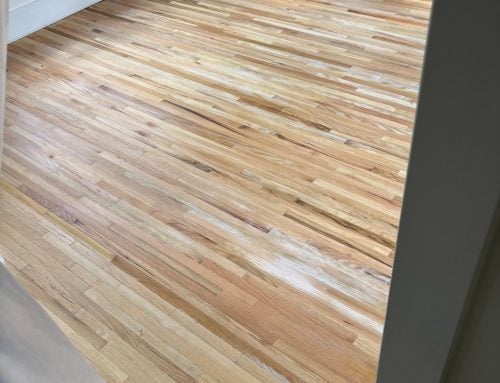
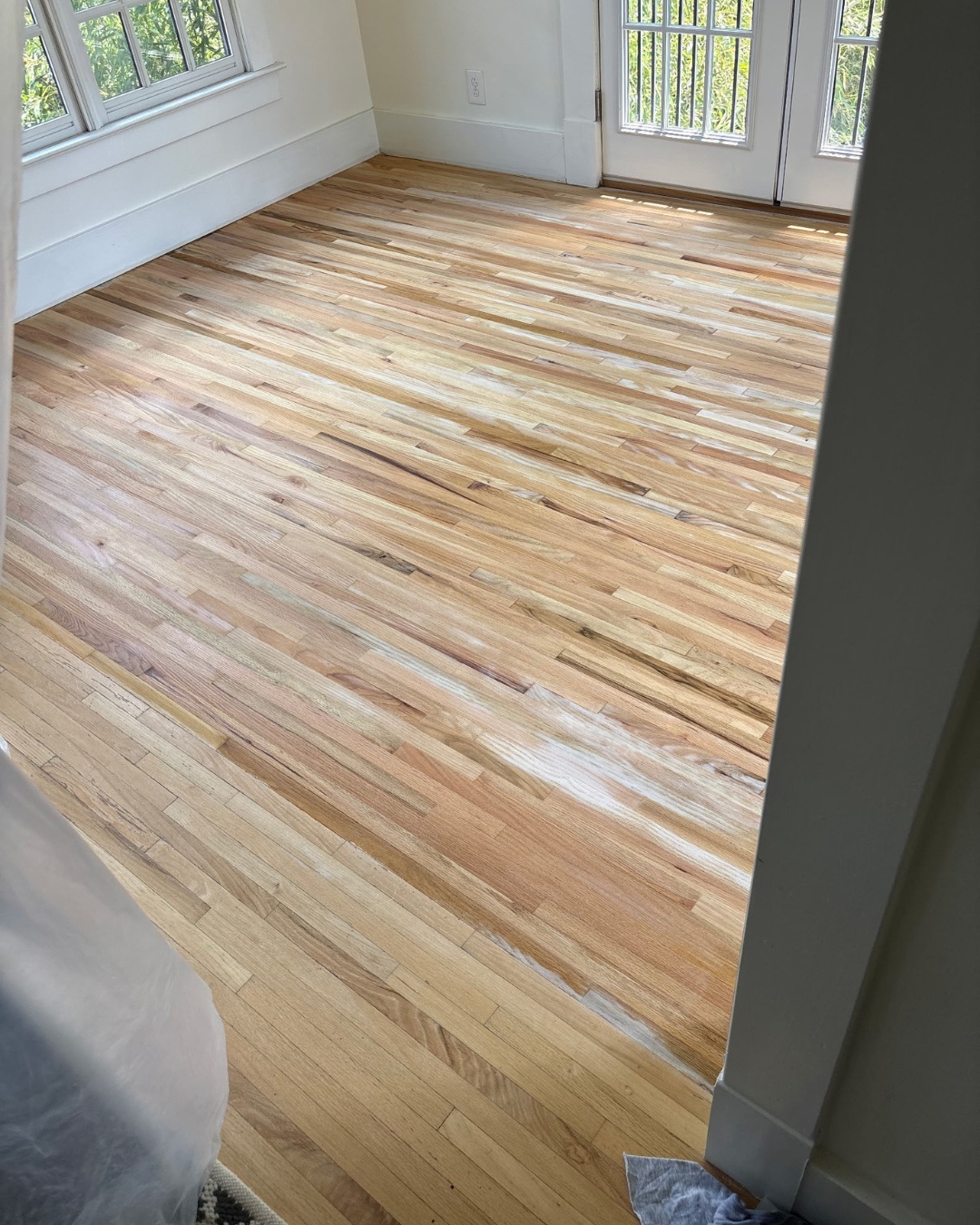
- Discoloration or gray patches – Gray areas indicate moisture has penetrated the wood, a common issue in older residences across the region
- Water stains from seasonal humidity – Dark staining around windows, doors, or high-moisture areas signals the need for floor restoration
- Finish peeling or flaking – Particularly in high-traffic hallways, kitchens, or entryways, peeling finish means refinishing is overdue
If you are noticing any of these signs, it is worth scheduling a professional assessment before the damage progresses further.
What Happens During the Refinishing Process?
Our hardwood floor refinishing process at C&S Flooring follows a careful, proven sequence designed to deliver smooth, lasting results.
Step 1 – Sanding: We use professional sanding equipment to remove the existing finish and smooth the surface evenly. This is the most critical step in achieving a clean, uniform result.
Step 2 – Staining: If you want to update the color of your floors, stain is applied after sanding. We help clients across Brentwood and Franklin select stain colors that complement their interiors.
Step 3 – Finishing: A durable topcoat is applied to protect the wood and restore its original beauty. We offer both water-based and oil-based finish options depending on your performance needs.
Throughout the entire process, we use a state-of-the-art dust containment system that keeps your space clean while we work. Most refinishing projects are completed within 2 to 3 days, minimizing disruption to your daily routine.
Local Factors That Affect Refinishing
The Greater Nashville area presents unique challenges that influence how often floors need refinishing and how the process unfolds:
Middle Tennessee humidity is one of the biggest variables. Oak floors – the most common species in area properties – are particularly responsive to moisture changes. Proper finishing helps seal the wood and reduce the impact of seasonal shifts.
Historic properties in the region often feature original solid hardwood that has been in place for 50 to 100 years. These floors frequently have significant wear layer remaining, making them excellent candidates for full restoration.
Newer builds in Brentwood and Franklin tend to use engineered floors for their stability in climate-controlled spaces. While these have fewer refinishing cycles available, a professional assessment can determine whether a full sand or a lighter recoat is the right approach.
Frequently Asked Questions
Q: How long does refinishing take? Most residential refinishing projects in the Greater Nashville area take between 2 and 3 days from start to finish, depending on square footage, floor condition, and finish type selected.
Q: How much does hardwood floor refinishing cost? Costs vary based on floor condition, square footage, and finish selection. For a detailed breakdown of pricing factors, visit our complete guide on hardwood floor refinishing cost Nashville TN.
Q: Can all floors be refinished? Most solid hardwood floors can be refinished multiple times. Engineered floors can often be refinished once or twice depending on veneer thickness. Floors that are severely warped, water-damaged, or previously sanded too many times may require replacement. Our team also offers hardwood floor installation in Nashville when replacement is the better long-term option.
Ready to Refinish Your Floors?
At C&S Flooring, we bring over 25 years of hands-on experience to every refinishing project across Brentwood, Franklin, and the surrounding communities of Middle Tennessee. Whether your floors need a full sand and refinish or a light restoration, our team will assess your floors honestly and recommend the right solution. Contact us today to schedule your free consultation.