C&S Flooring | Nashville, TN • csflooringnashville.com • 629-210-1101
10 Common Questions About Hardwood Flooring, Answered by Nashville’s Flooring Experts
Published by C&S Flooring | Hardwood Installation, Sand & Finish, and Luxury Vinyl in Greater Nashville, TN
Whether you’re a first-time homeowner or you’ve been renovating Nashville homes for years, choosing and caring for new floors can feel overwhelming. At C&S Flooring, we’ve been installing and refinishing hardwood floors in Nashville, Brentwood, Franklin, and the surrounding areas for over 25 years. We hear the same great questions from homeowners every day.
We’ve put together answers to the 10 most common questions we receive about hardwood flooring, luxury vinyl plank (LVP), sand and finish, and everything in between. Read on, and don’t hesitate to reach out for a free consultation.
1. Can a Prefinished Floor Be Sanded?
This is one of the most important questions to ask before you commit to a floor, because the answer depends on what type of flooring you have.
Only 3/4″ solid hardwood flooring can be reliably sanded down and refinished. Some 1/2″ solid floors can handle a light sand, but anything thinner (such as 3/8″ or 5/8″ products) generally cannot be sanded, regardless of the wear layer thickness.
There’s another big caveat: wire-brushed or hand-scraped prefinished floors cannot be sanded. The texture is part of the surface itself, so sanding removes the character that made the floor attractive in the first place.
💡 Pro Tip: Always ask about the flooring thickness and surface texture before purchasing if long-term refinishability is important to you.
2. Can I Walk on My Floor While It’s Being Sanded?
There are some moments during the sand and finish process when limited foot traffic is possible, but in general, it’s best to let your professional flooring team control the space entirely.
Here’s why: hardwood finish is extremely sensitive to dust, drafts, and foot traffic while it cures. If a homeowner walks in too early or opens a door to check on progress, the resulting draft can pull dust from fans, light fixtures, or other rooms directly onto the wet finish, permanently embedding it in your floor.
Professional crews like ours know exactly how to minimize dust, manage airflow, and protect the floor at every stage. Handing over control of the space during a sand and finish is one of the best things you can do for the final result.
3. Will There Be a Lot of Dust?
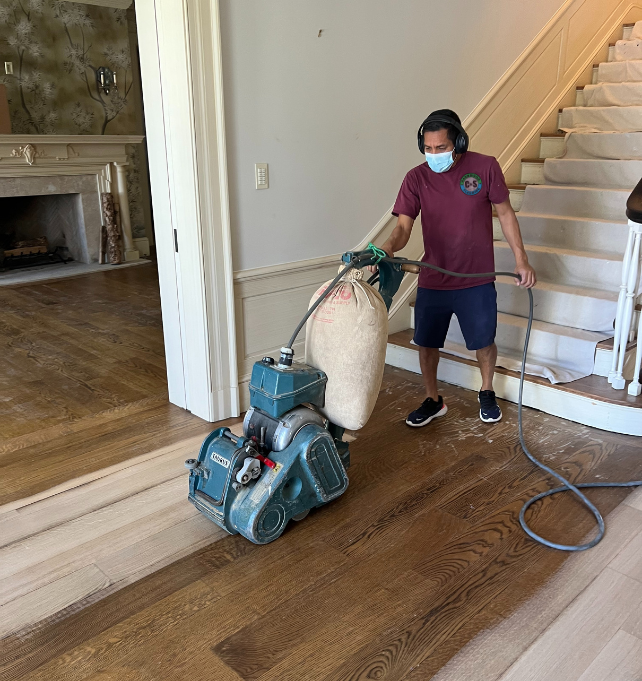
Dust is one of the biggest concerns homeowners have about hardwood sanding, and it’s a fair one. The good news is that professional flooring companies use vacuum-equipped sanding machines that capture the vast majority of dust at the source. A well-equipped crew should eliminate around 95% of airborne dust during the sanding process itself.
That said, demolition and prep work is a different story. Removing old carpet, for example, stirs up years of accumulated dirt, old drywall dust, and construction debris that was trapped underneath during the original build. This phase will produce more dust than the sanding phase, but a professional team will take steps to contain it and protect your home.
💡 Pro Tip: If you’re sensitive to dust or have respiratory concerns, plan to spend a day or two out of the house during demo and early sanding stages.
4. Is Luxury Vinyl Plank (LVP) a Good Choice for My Home?
Luxury vinyl plank has become one of the most popular flooring options in Nashville, and for good reason. It’s durable, water-resistant, and available in an enormous range of styles that mimic real wood convincingly.
But not all LVP is created equal. Like any product category, there’s a wide range of quality from budget options that wear out quickly to premium products built to last decades. If you shop purely on price, you’ll likely be disappointed.
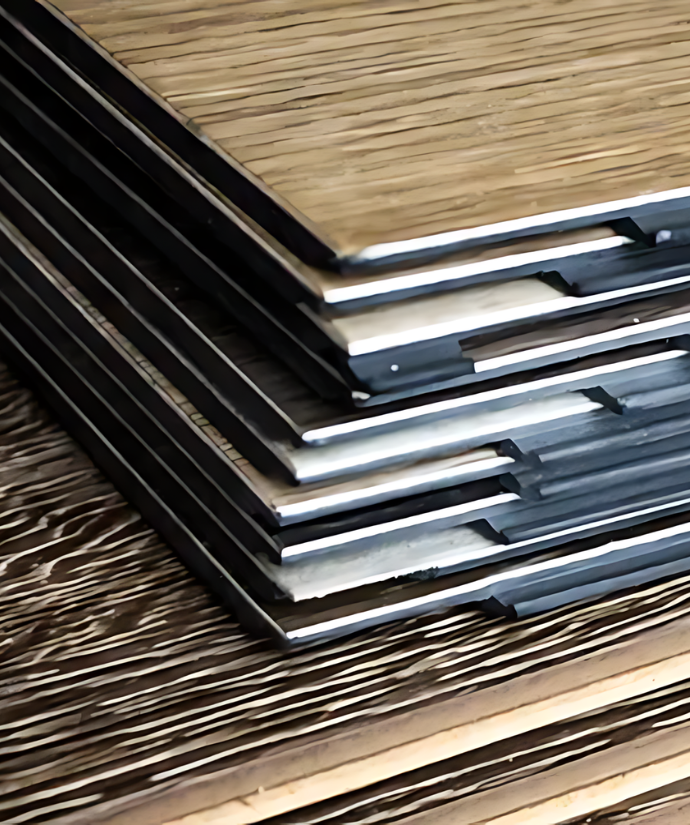
As a general rule of thumb, we recommend staying in the $1.80 to $2.50 per square foot range or higher when selecting an LVP product. Below that threshold, you’re likely sacrificing wear layer thickness, core stability, or realistic texture. You’re already choosing one of the most cost-effective flooring options available. Don’t undercut yourself at the finish line.
💡 Pro Tip: Ask your flooring contractor about the mil thickness of the wear layer. A higher mil rating means more protection against scratches and everyday wear.
5. Can Other Contractors Work in the House While Flooring Is Being Installed?
This question comes up often on larger renovation projects, and the short answer is: it’s very difficult, and sometimes impossible.
Think about it: flooring is literally the surface everyone stands and walks on. Unlike a painter who can work in one room while a plumber works in another, a flooring crew needs clear, dry, foot-traffic-free access to lay and cure each section. Having other trades moving through the space can crack freshly laid planks, contaminate adhesive, or damage finish before it sets.
For the best results and to avoid costly rework, we strongly recommend sequencing your renovation so flooring is one of the last trades to finish their work before move-in.
6. Which Direction Should My Hardwood Floor Run?
Direction matters more than most homeowners realize, both aesthetically and structurally.
For solid nail-down hardwood flooring, the planks should always run perpendicular to the floor joists beneath. This isn’t just a style choice. It’s a structural one. Running boards across the joists provides stability and prevents the floor from flexing, squeaking, or developing gaps over time.
With engineered hardwood (glue-down), LVP, or laminate, you have much more flexibility. These products are dimensionally stable enough to run in any direction, and many installers choose the direction that makes the room feel longest or most open visually.
💡 Pro Tip: Running flooring toward the primary light source (usually the front door or main windows) is a classic design trick that makes spaces feel more open and natural.
7. How Should I Clean and Maintain My Hardwood Floors?
Proper maintenance is the single biggest factor in how long your hardwood floor stays beautiful, and the most common mistakes are surprisingly simple.
Never use polish, wax, soap-based cleaners, or any product that leaves a residue on hardwood. These products build up over time, dulling the finish and making future refinishing much more difficult.
Stick to products specifically designed for hardwood floors. Bona Hardwood Floor Cleaner is one of the most widely recommended by professionals. Clean water on a barely damp mop is also safe for light cleaning. Two things to absolutely avoid: steam mops and excess water. Both can penetrate the wood and cause swelling, warping, or finish damage over time.
💡 Pro Tip: Place felt pads under all furniture legs and use area rugs in high-traffic areas to dramatically extend the life of your finish.
8. How Long Will My Flooring Project Take?
Project timelines vary based on the size of your space, the product you’ve chosen, and the complexity of the installation. Here’s a general guide:
For hardwood installation, professional crews can typically lay 500 to 1,000 square feet per day. Sand and finish work moves faster, and an experienced team can handle 1,000 to 2,500 square feet per day during the sanding phase, though finish coats add additional dry time between applications.
A smaller job, say a single bedroom or living room under 500 square feet, can often be completed in one to two days. Larger whole-home projects spanning 1,500 to 3,000 square feet typically take five to seven days, accounting for prep, install, and finish curing time.
💡 Pro Tip: Build a couple of extra days into your schedule for unexpected prep work like subfloor leveling or extra demo. It’s far less stressful than rushing the finish.
9. How Long Does Hardwood Flooring Need to Acclimate?
Acclimation is probably the most misunderstood concept in hardwood installation, and getting it wrong is one of the most common causes of floor failure.
Here’s the truth: acclimation isn’t really about time. It’s about moisture content. The goal of acclimation is to bring the moisture content of your new hardwood within three percentage points of the moisture content of your subfloor and your home’s environment.
A floor installed in a climate-controlled Nashville home in July may only need a few days. The same product shipped from a humid warehouse in August might need longer. The variables that matter are: where the product is coming from, what the moisture content of the wood is when it arrives, and whether the conditions in your home will remain stable after installation.
This is why professional moisture testing before installation is non-negotiable. At C&S Flooring, we always test before we install.
💡 Pro Tip: Make sure your HVAC system is running and maintaining normal living conditions during acclimation. Acclimating wood in a home without climate control doesn’t prepare it for the environment it will actually live in.
10. What Causes Hardwood Floors to Cup or Crown?
Cupping and crowning are two of the most alarming things a homeowner can discover on a hardwood floor. Understanding what causes them goes a long way toward preventing them.
Assuming the floor was properly acclimated and installed, both issues are caused by moisture imbalance, but they work in opposite directions.
Cupping occurs when the edges of each board are higher than the center, creating a concave surface. This happens when moisture rises from below the floor (a wet crawl space or concrete subfloor) or from above (a water spill or high interior humidity) and stays elevated for an extended period. The board absorbs more moisture on the bottom than the top, causing it to expand unevenly and cup.
Crowning is the opposite: the center of the board is higher than the edges. This typically occurs after a flooding or moisture event where the floor was previously cupped. If the moisture is removed too quickly (by aggressive drying or dehumidification), the top surface dries out faster than the bottom, pushing the center upward.
In both cases, the key is addressing the moisture source. Many cupped and crowned floors can be saved with proper drying time and refinishing, but sanding a cupped floor before it has fully dried and equalized will almost always lead to crowning later.
💡 Pro Tip: If you notice your floor starting to cup, resist the urge to sand it immediately. Call a professional first to assess the moisture situation before taking any action.
Ready to Transform Your Nashville Home’s Floors?
C&S Flooring has served Greater Nashville, including Brentwood and Franklin, for over 25 years. We specialize in hardwood floor installation, sand & finish refinishing, and luxury vinyl plank and tile installation. Every project comes with a free in-home measurement and a detailed, customized estimate.
📞 Call us: 629-210-1101
🌐 Visit: csflooringnashville.com
📍 Serving Nashville, Brentwood, Franklin, and Greater Middle Tennessee
Contact C&S Flooring today to schedule your free consultation and experience worry-free flooring from trusted local professionals.